Emerson Normand Carville: Background and Public Information Overview
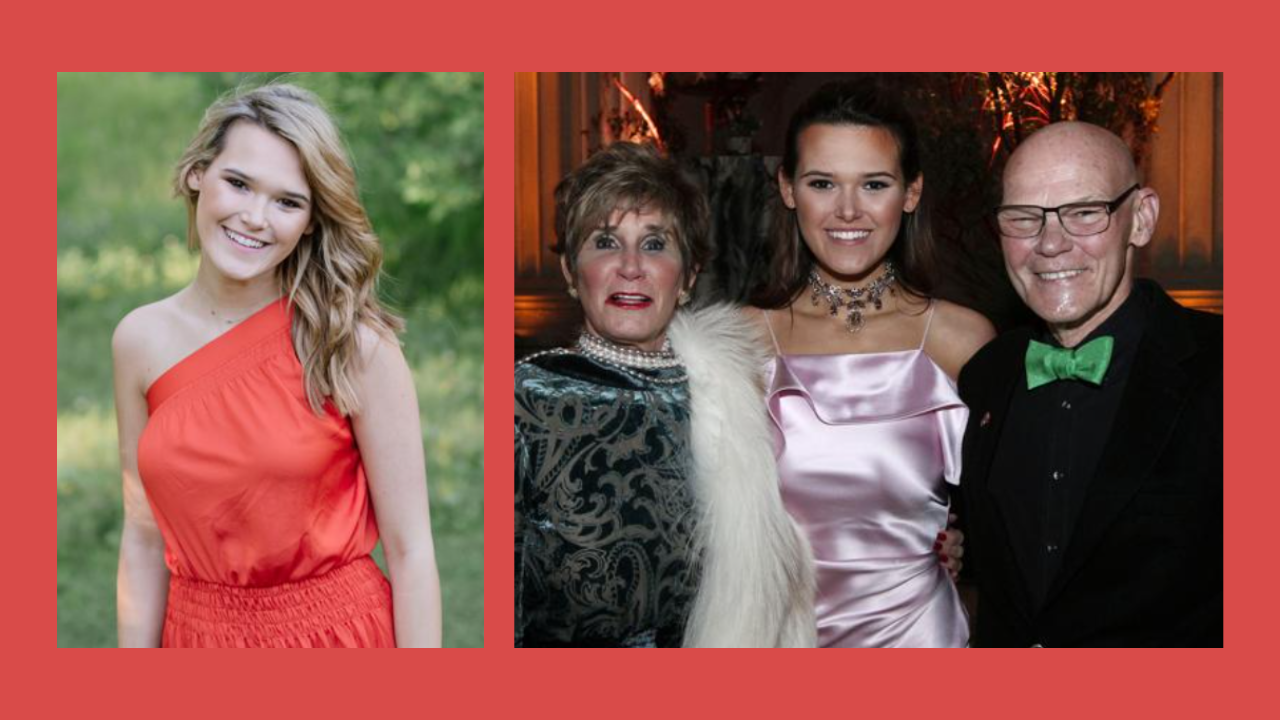
Introduction: Understanding Emerson Normand Carville
Emerson Normand Carville tends to draw public attention not because of her own prominent political career, but because of the well-known family she comes from. As the daughter of two influential political strategists with long histories in national politics, she occasionally appears in biographical profiles and broader discussions of children raised in politically powerful households. Over the years, curiosity about her life has grown, with people frequently seeking basic details such as her age and whether she identifies with a particular political party. That interest reflects a desire to understand her as an individual, separate from her parents’ public identities. This article aims to present a clear and grounded overview of what is publicly known about Emerson Normand Carville, while also acknowledging the areas where information remains limited or private.
Early Life and Family Background
Emerson Normand Carville grew up in a household that reflected a striking mix of political beliefs rarely seen under one roof. Her father, James Carville, built his reputation as a Democratic strategist through decades of work on major national campaigns and as a sharp, outspoken political commentator. Her mother, Mary Matalin, followed an equally influential path on the Republican side, serving in senior advisory roles and remaining a respected voice in conservative politics. Their marriage stood out not only because of their professional success but also because it bridged two opposing political worlds, becoming a well-known example of how significant ideological differences can coexist with mutual respect and partnership.
Being raised in that kind of household meant that Emerson encountered political discourse early on, but it also taught her something subtler: that disagreement need not lead to division. Alongside her older sister, she grew up in a family that encouraged thoughtful discussion, learning, and curiosity, while still respecting individual boundaries and personal privacy. Her childhood was shaped by time spent in both Washington, D.C., and Louisiana, experiences that offered very different perspectives on culture and daily life. Eventually, the family put down roots in New Orleans, where local traditions, community ties, and a strong sense of place became integral to her upbringing.
How Old Is Emerson Normand Carville?
One of the details people seem most curious about is Emerson’s age. Despite that interest, she has never disclosed her date of birth, and there are no widely available official records that clearly confirm her age. Because of this, any account of her age is based on approximation rather than verified information, leading to varying estimates rather than a single confirmed answer.
From biographical accounts and the timing of her education and public milestones, Emerson is widely believed to have been born in the late 1990s. That would put her in her mid-20s today. Still, this conclusion is drawn from context rather than confirmed records, so it should be viewed as an informed estimate rather than a precise or officially verified fact.
Family Dynamics and Political Influence at Home
Growing up with parents who held opposing political views gave Emerson a perspective that few people experience firsthand. In a home where politics was part of everyday life, conversations were not avoided but embraced, often with energy and strong opinions on display. Being surrounded by such open exchange likely helped shape the ability to think critically, listen carefully, and recognize that complex issues can be viewed from multiple perspectives.
Even with politics constantly present in the background, Emerson’s childhood was not centered entirely on her parents’ professional lives. Her family placed importance on everyday routines and personal growth, giving her and her sister the space to explore their own interests without pressure to follow a particular path. Shared traditions, participation in cultural events, and an active social life helped maintain balance, especially after the family made New Orleans their home. The city’s strong sense of community and culture became a meaningful part of her upbringing, shaping her experience beyond politics.
Education and Personal Development
While Emerson Normand Carville has largely kept her personal life out of the public eye, there is general agreement that she earned a college degree, completing her studies around 2020. Details about her primary or academic focus have not been publicly shared, but what is known suggests that her time in higher education was guided more by personal interests and growth than by any intention to step into the political arena or public life.
Outside her academic life, Emerson appears to place a strong emphasis on keeping her day-to-day life grounded and primarily out of the spotlight. What little she chooses to share publicly tends to center on ordinary moments—time spent with friends, travel experiences, and personal interests—rather than opinions on politics or public issues. That restraint suggests a conscious decision to keep her life her own, valuing authenticity and self-expression without the need for attention or public validation.
Career Path and Public Activity
Unlike many people who grow up surrounded by political influence, Emerson Normand Carville has not entered public service in politics, the media, or government. There is no evidence that she has worked on campaigns, advised political figures, or held any formal position connected to party leadership. Instead, she seems to have intentionally chosen a direction that keeps her life separate from the political world her parents are known for, allowing her to remain largely out of public view.
That choice stands out, especially considering the assumptions and pressures that often follow the children of famous political figures. Although the specifics of Emerson’s professional life have not been made public, her path suggests an apparent effort to draw boundaries between who she is and the careers that defined her parents’ public lives. In doing so, she reflects a broader commitment to independence, showing that personal direction and self-determination can matter more than expectations tied to family legacy.
Emerson Normand Carville Political Party: What Is Known
Another point of curiosity for many people is whether Emerson Normand Carville identifies with a particular political party. Despite the attention surrounding her background, there is no reliable public information indicating that she belongs to any party or political organization. She has never made a public statement aligning herself with either the Democratic Party, the Republican Party, or any other political group, leaving her personal views and affiliations firmly private.
Having grown up in a home where both major political parties were represented, Emerson was almost certainly exposed to many different perspectives on public issues. Still, in the absence of her own statements or visible involvement in political activity, concluding her beliefs would be guesswork. Her decision not to speak publicly on such matters appears intentional, indicating a preference to keep her political views private rather than part of the public discourse.
Public Recognition and Media Attention
For the most part, any public awareness of Emerson Normand Carville comes from her connection to her parents rather than from her own activities. When her name appears in the media, it is usually in biographical pieces about her family or broader discussions of well-known political households. On rare occasions, she is mentioned in relation to social gatherings or family moments. Still, these references are brief and infrequent, offering no indication that she seeks or maintains a public-facing role of her own.
That limited visibility highlights an essential difference between being recognized by association and being recognized for one’s own public actions. Emerson is known to many primarily because of her family background, not because she has actively sought attention or influence. Her low-profile approach mirrors a choice made by some members of prominent political families who prefer to keep their lives private rather than engage publicly or build a public persona.
Conclusion: A Private Identity Within a Public Legacy
Emerson Normand Carville offers a clear example of how someone can grow up within a well-known political family while still carving out an identity that remains distinctly their own. Even as interest persists in questions such as how old she is or whether she aligns with a particular political party, the available public information suggests a person who prioritizes privacy, education, and self-determination rather than living in the public shadow of her family’s legacy.
Based on publicly available information, Emerson is generally thought to be in her mid-20s, to have completed her formal education, and to have avoided any visible political affiliation or public role. Her story serves as a quiet reminder that coming from a powerful political family does not dictate one’s future. Rather than following a predetermined path, Emerson Normand Carville appears to have shaped her own identity on her own terms, even while growing up in the orbit of a very public family legacy.
Read More: Tech Ultimate